The verified story
A life carried forward in the record.
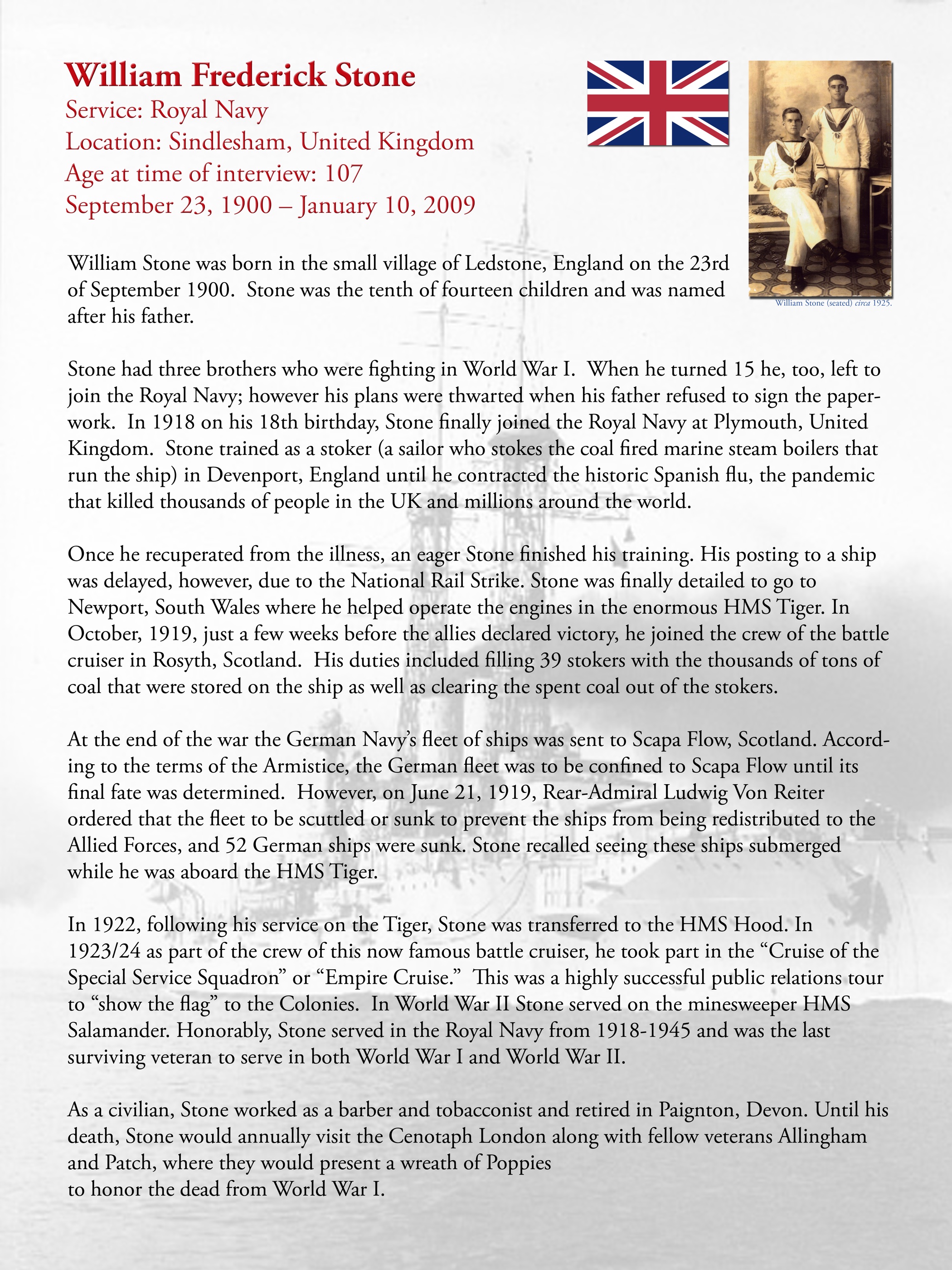
William Frederick “Bill” Stone was born September 23, 1900, in Ledstone, South Devon, the tenth of fourteen children. Three older brothers were already serving when, at fifteen, he tried to join the Royal Navy. His father refused the required permission. Stone returned on his eighteenth birthday in 1918 and enlisted at Devonport, initially training as a stoker before influenza interrupted his preparation.
The Armistice came before he reached a wartime ship, but Stone remained in the Navy. He served in HMS Tiger and later HMS Hood, joining the 1923–24 “Empire Cruise.” His career then carried the First World War generation into a second global conflict. As chief stoker in HMS Salamander, he made five Dunkirk evacuation trips and later served on Arctic convoy duty. In HMS Newfoundland, he took part in the Sicily landings and was mentioned in dispatches after the cruiser was torpedoed.
Stone completed twenty-seven years of naval service in 1945. He became a barber and tobacconist in civilian life and remained active in veterans’ organizations. His family remembered a determined man of faith whose motto was “Keep Going.”
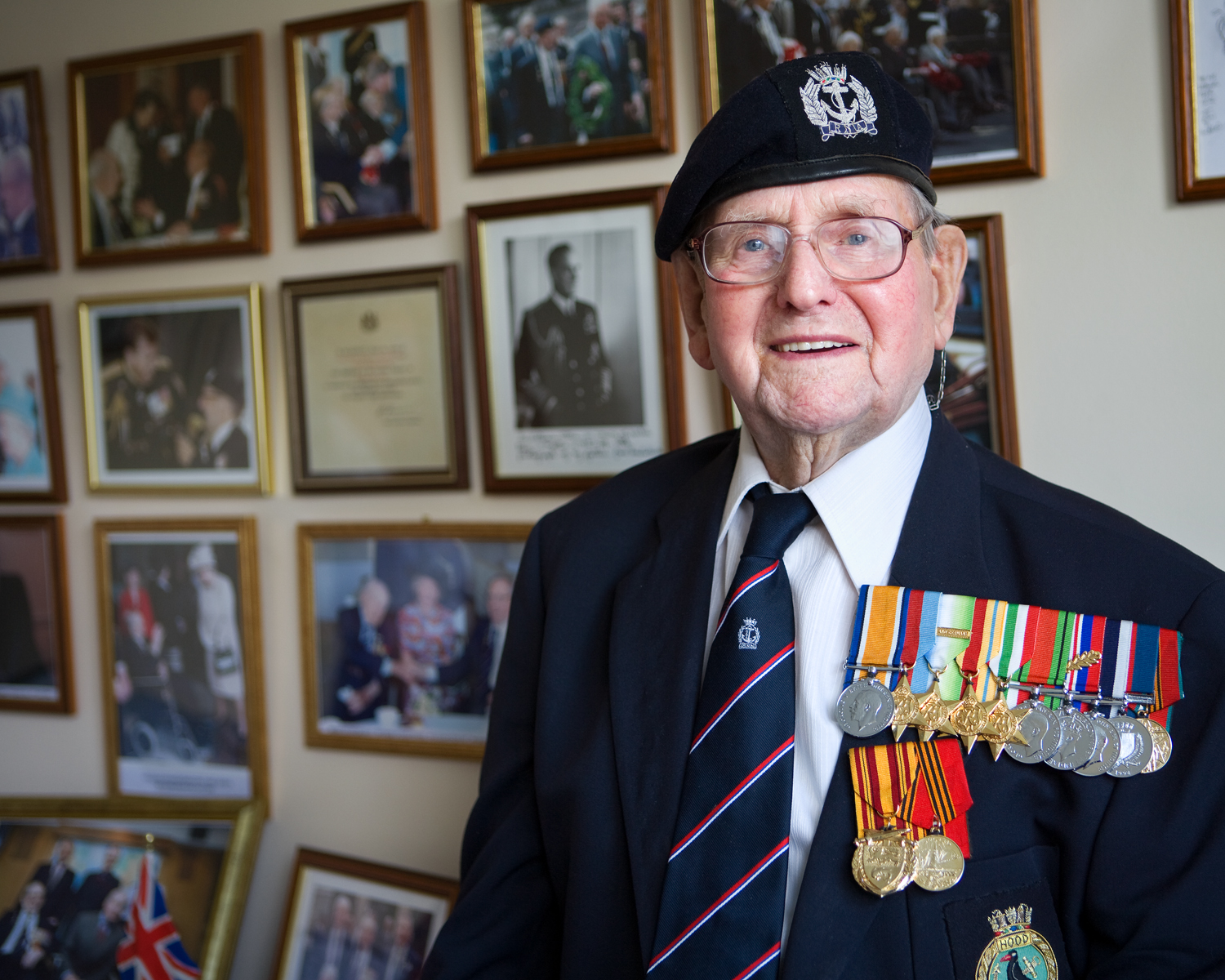
DeJonge’s portrait places Stone beside Allingham and Patch as part of the British continuation of the project. His significance is different from theirs: not the final trench fighter or RAF founder, but a sailor whose service formed a living bridge between both world wars.