The verified story
A life carried forward in the record.
Henry John “Harry” Patch was born June 17, 1898, in Combe Down near Bath. A plumbing apprentice before the war, he was conscripted in 1916 and served with the Duke of Cornwall’s Light Infantry as the number two on a Lewis gun team. In 1917 he fought at Passchendaele, where industrial firepower and deep mud turned the battlefield into an ordeal that remained with him for the rest of his life.
Patch described ammunition boxes stacked into makeshift walkways across the mud. During the battle, shrapnel tore into his abdomen. With anesthetic unavailable, a doctor removed a jagged fragment while four men held him down. He survived; members of his gun team did not. For decades he rarely spoke about the war. In old age, he returned to Passchendaele, honored comrades on both sides, and became a forceful witness for peace.
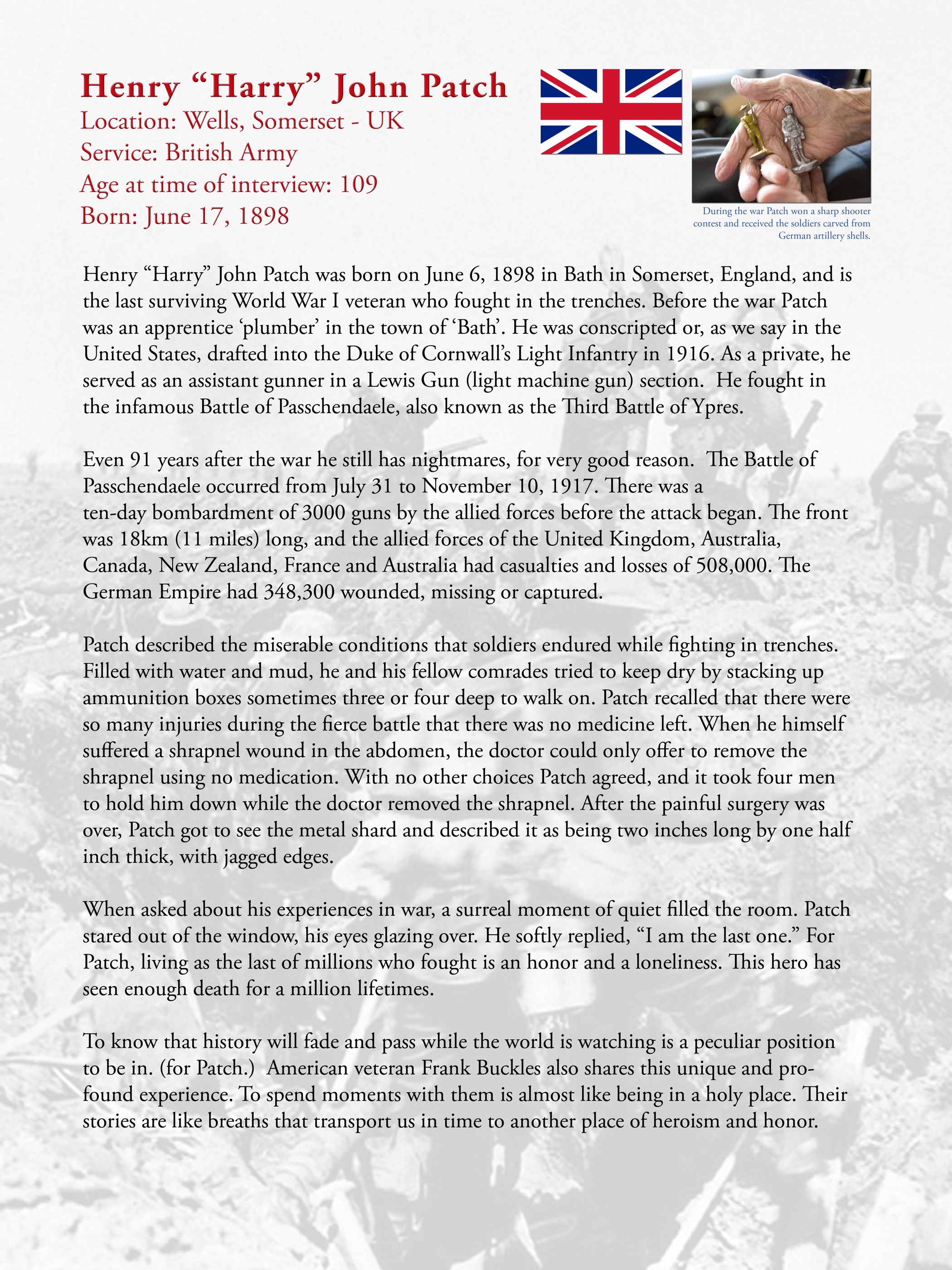
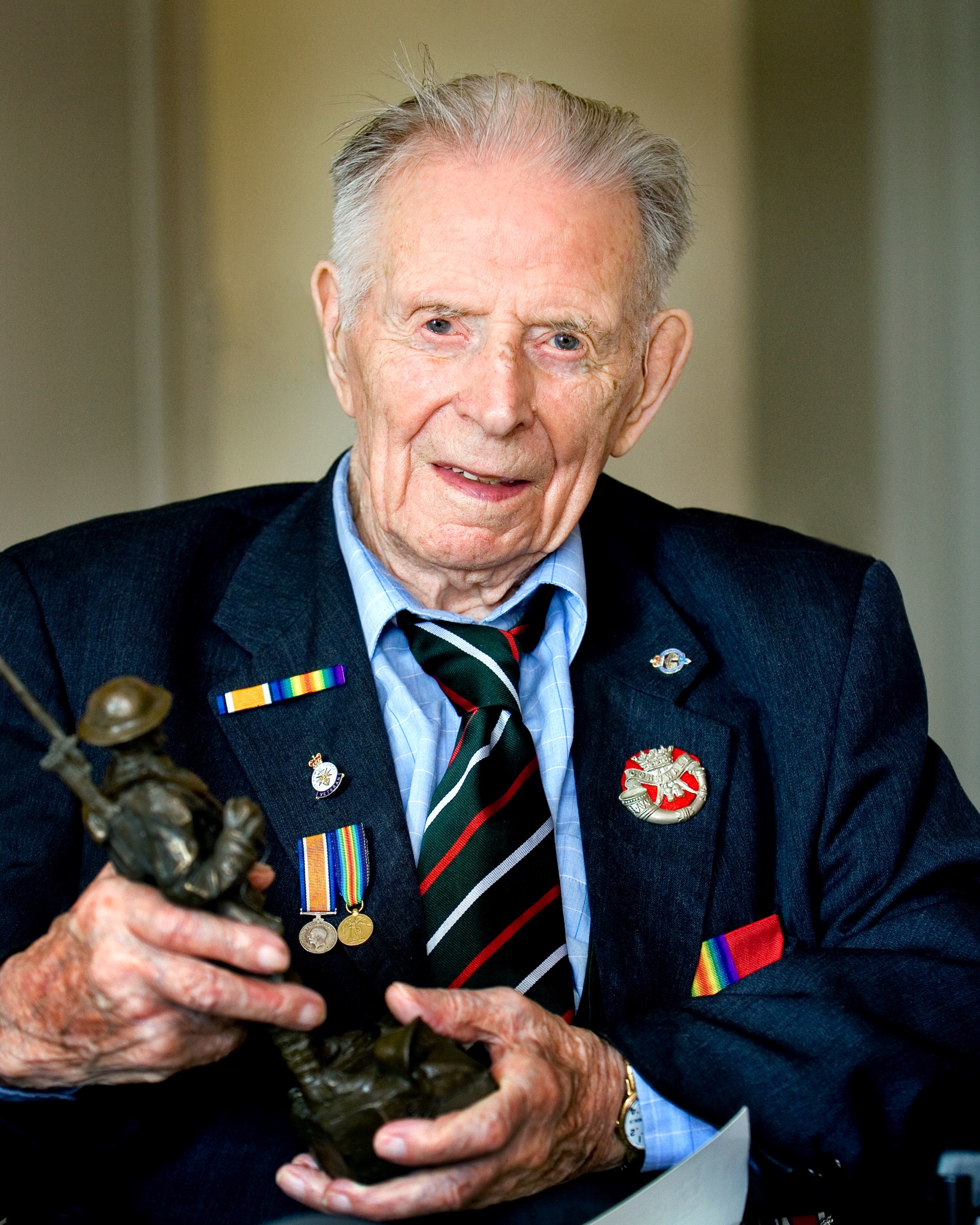
During DeJonge’s encounter, a question about the war brought a long stillness. Patch looked through the window before saying, “I am the last one.” The loneliness inside that fact became central to the portrait. In another defining image, Patch holds a small bronze First World War serviceman. The object fits in his hands, but it stands for a generation too large for any one survivor to carry.
Patch urged younger people to support lifeboats because they save lives rather than take them. His final public role was not to glorify battle, but to tell the truth about its cost.